
Chief Judge or Case Collector? Walkers Chiefdom …
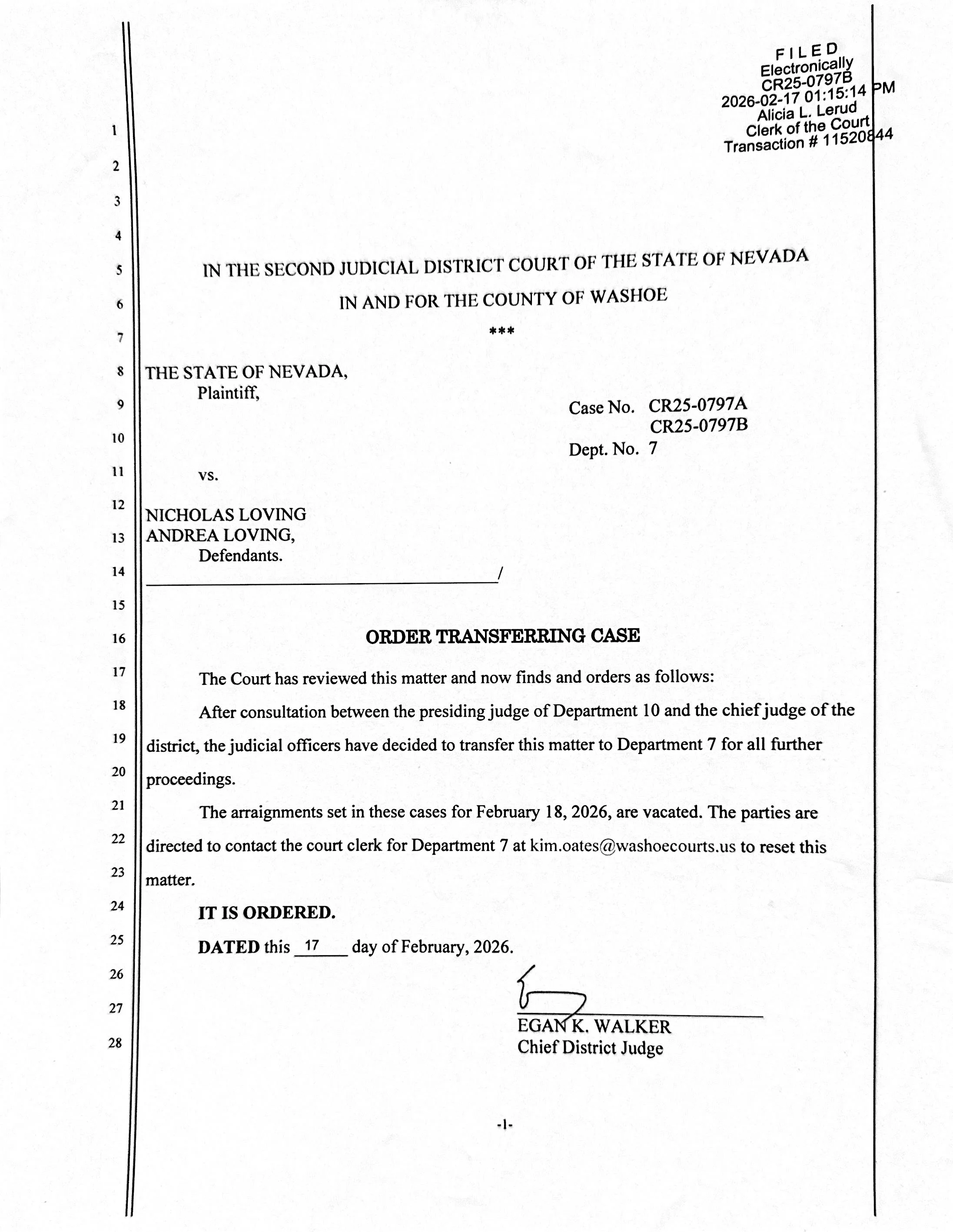
What we just got handed at the Second Judicial District Courthouse from a local criminal law attorney - you should never let Picon roam the hallways. We are still on the hunt to learn what alleged “action” is being taken against Department 4’s Judge Connie Steinheimer and why.
If Chief Judge Egan Walker keeps this up, we may need to start reserving him a permanent headline slot.
Word around the courthouse is that Walker has reassigned — or as some are calling it, “hijacked” — a case originally sitting in Department 10 under Judge Kathleen Sigurdson. The case involves the parents of deceased 5-year-old Izabella Loving, and it is unquestionably one that will draw intense public and media scrutiny.
Here’s the issue: the Second Judicial District Court has long maintained that cases are assigned through a “random” system — one designed specifically so no one can influence assignments, cherry-pick high-profile matters, or avoid difficult ones. That safeguard is meant to protect judicial integrity and public trust.
So when the NEW chief judge removes a case from one department and takes control of it, the obvious question becomes: why wasn’t it returned to the random assignment system?
Administrative authority does allow a chief judge certain powers to reassign cases. That’s not in dispute. But perception matters. If a case with high visibility and political implications is redirected outside the usual random process, the public deserves a clear explanation. Transparency is not optional in moments like this — it is essential.
Complicating matters further are longstanding concerns about the involvement of the Washoe County Human Services Agency in issues connected to the Loving household — concerns that have circulated publicly before - we wrote about a previous case last year. When agencies that may face scrutiny intersect with court leadership, even indirectly, it heightens the need for absolute clarity.
To be clear, questioning process is not accusing motive. But when a chief judge steps into a case of this magnitude, bypassing the optics of randomness, it creates an avoidable cloud. The judiciary’s credibility rests not only on fairness but on the appearance of fairness.
If there was an administrative necessity, say so. If there was a conflict requiring reassignment, explain it. Silence invites speculation, and speculation erodes trust.
Courts do not exist to manage optics — but they cannot ignore them either. When the public sees a high-profile case move from one courtroom to another without clear reasoning, it doesn’t look like routine docket management. It looks like control.
And in a case involving the death of a child, nothing about that should feel orchestrated.
The judiciary functions best when its processes are transparent and predictable. If the random system is truly random, then it should be used — especially when the spotlight is brightest.
There has been no transparency coming from the Second Judicial District Court since Judge Egan Walker assumed the fiefdom, oops, we mean cheifdom.