
No Comment, No Clarity - What We Expect from the Second Judicial District Court
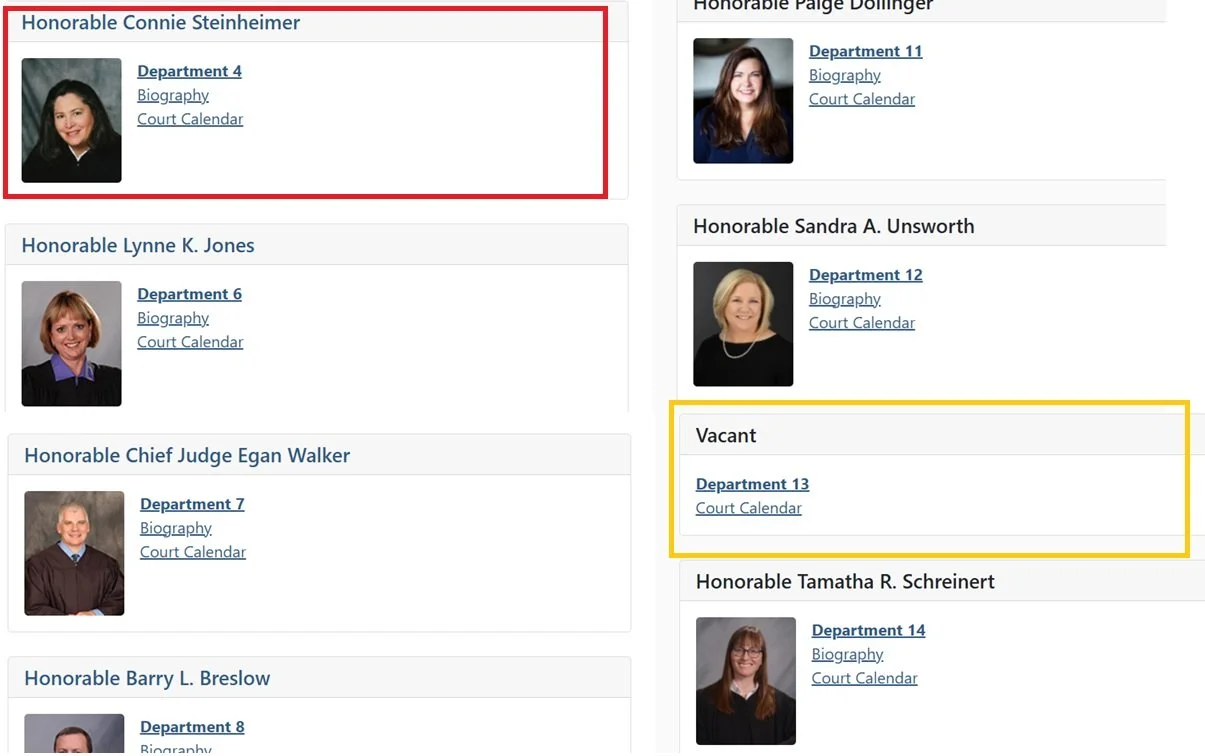
Call the court and ask them where, oh where, is Judge Steinheimer. The vacant Department 13 is due to Bridget Robb needing to resign because of alledged stalking. She has an upcoming court hearng.
We received several calls last week from local attorneys asking the same question: had we heard anything about Connie Steinheimer, judge for the Second Judicial District Court, Department 4, being relieved of her docket?
Say what?
At the time, we couldn’t get confirmation from the court. Phones rang. Messages went unanswered. So yesterday we did what reporters — and curious citizens — have always done: we walked the courthouse halls ourselves. While no one was willing to speak on the record, it was clear something is, at the very least, shifting behind the scenes.
What stood out most was the apparent effort to keep information tightly contained. Both Chief Judge Egan Walker and Clerk of Court Alicia Lerud appeared to be maintaining a firm “no comment” posture. Courts are, of course, bound by procedures and personnel rules, but when public dockets change without explanation, it naturally raises questions. These are elected or appointed public officials operating in taxpayer-funded institutions. Silence, even when legally justified, can feel less like prudence and more like distance from the very public the system serves. Mike’s Reno Report featured an article today from an individual who made a bar complaint against Judge Bridget Robb many years ago and it fell on deaf ears, maybe someone should have listened. Shouldn’t we have a right to know why Judge Steinheimer isn’t hearing her docket?
The situation also arrives while Department 13 remains vacant following the resignation of Bridget Robb. That vacancy alone has already drawn attention to court operations and scheduling pressures. With another department now the subject of hallway speculation, transparency becomes more important, not less. It also makes us ponder how much Walker and Lerud really knew, much like what is happening in Steinheimer’s Department 4.
To be clear, unanswered questions are not the same as wrongdoing. Personnel changes can occur for many legitimate reasons — medical leave, administrative reassignment, ethics reviews, or temporary workload balancing among departments. Courts often cannot comment while matters are under review. But when information is scarce, rumors tend to fill the void, and that serves no one well — not the judges, not the attorneys, and certainly not the public.
What citizens are asking for is not sensational detail; it is basic clarity. If a docket is reassigned, say so. If a judge is on leave, acknowledge it. Even a brief statement explaining that more information will follow can go a long way toward maintaining trust.
For now, we will keep asking questions and watching the calendars, and hey, we’ll meander into Department 4 and see who is sitting on the bench. Courthouses function best in the light of day, and public confidence grows when communication is proactive rather than reactive. Silence may be procedural, but transparency is what sustains credibility.