
We Can’t Be Bought
Washoe Valley Residents Speak — But the Votes Were Already Counted …
At the Tuesday, March 10, 2026 meeting of the Washoe County Commission, the setup on the dais appeared clear from the start.
A trio had formed.
Commissioners Alexis Hill, Clara Andriola, and Mariluz Garcia seemed poised to overturn the earlier denial of the Sierra Reflections development by the Washoe County Planning Commission.
But before that vote arrived, the meeting began with what Commissioner Hill hoped was a dramatic moment.
Commissioner Hill launched into a passionate statement about ethics after receiving what she described as a disturbing text message from developer Mark Campbell regarding a separate easement request pending before the county.
Hill told the audience she had asked the District Attorney’s Office to investigate, saying:
“This developer essentially wrote he would like to see my vote as a quid pro quo in order to receive campaign donations… which I would never do. That is fully unacceptable in Washoe County and Nevada.”
She continued, emphasizing:
“We cannot be bought. We cannot be paid for.”
Chairwoman Andriola quickly followed with her own statement.
“It is hard to hear that anyone would think that anyone could write a check and be bought.”
Strong words.
But they also invited a little reflection.
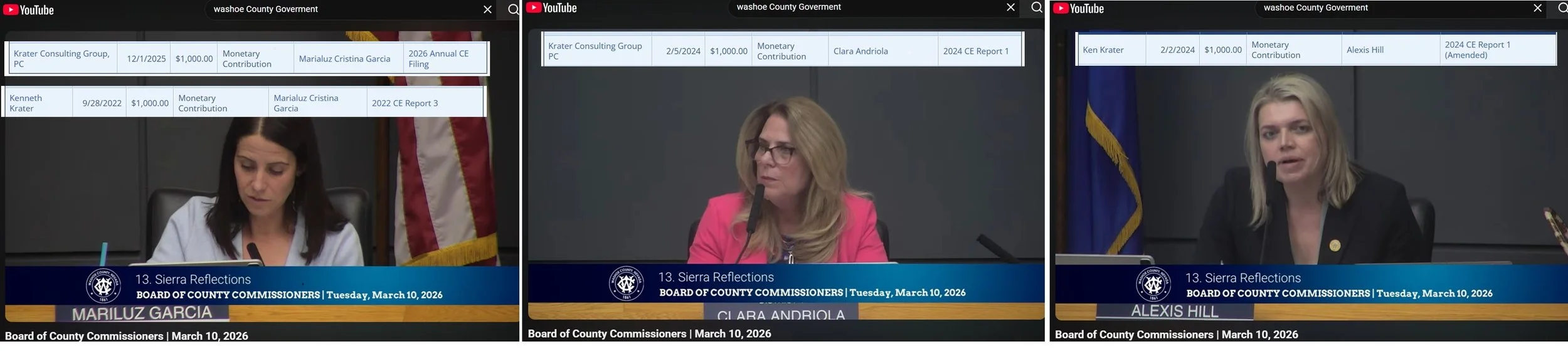
A look through the campaign finance filings for Hill, Andriola, and Garcia shows substantial donations from developers and special-interest groups tied to development interests. Campaign fundraising is, of course, legal and common in politics — but the optics can be striking.
It almost had the feel of the famous wedding scene in the film The Godfather, where the bride accepts envelopes filled with cash quietly changing hands while favors are discussed in back rooms.
Then came the main event.
The proposed Sierra Reflections development in Washoe Valley.
More than 60 residents spoke during public comment, urging the commission to uphold the Planning Commission’s decision to deny the project. They came organized, informed, and prepared with detailed concerns about density, infrastructure, fire, and the long-term character of their community.
These weren’t simply neighbors saying “not in my backyard.”
They had done their homework.
But by the time the discussion reached the dais, the trio had already made the deal.
Commissioner Garcia announced she had met with the developer and negotiated what she described as a $1 million contribution toward a future Washoe Valley fire station.
Assistant District Attorney Mike Large even held up a written agreement during the meeting.
The problem?
A new fire station is estimated to cost roughly $16 million.
So while Garcia’s negotiated million dollars was praised Andriola and Hill on the dais, critics quickly pointed out the obvious math.
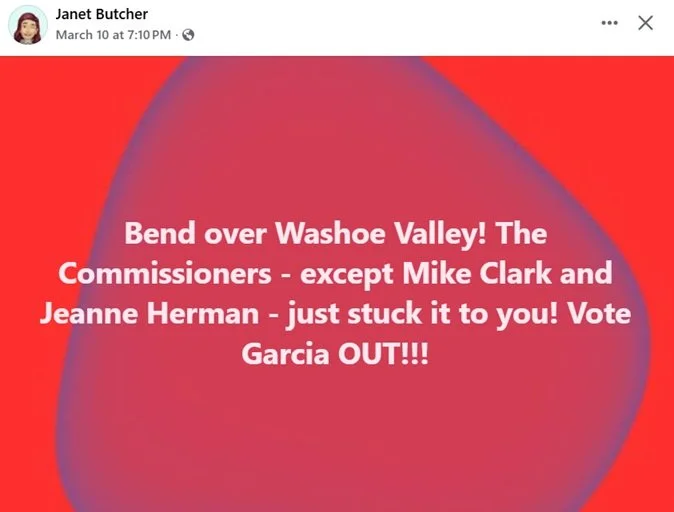
Thought this sort of summed the March 10th commission meeting up.
Commissioner Mike Clark, who actually represents District 2, where Washoe Valley is located, called the deal what many residents were already thinking:
“Chump change.”
And he may have a point.
If the development is projected to generate massive returns for the builder, why settle for a fraction of what the community infrastructure might ultimately require?
Still, the trio of Hill, Andriola, and Garcia praised the arrangement.
When frustrated residents realized the decision appeared to be made, tempers rose. Chairwoman Andriola briefly cleared the chamber before allowing residents back in for the final vote.
And when that vote came, the outcome followed the contribution pattern.
Hill, Andriola, and Garcia voted to approve the development — overriding the Planning Commission and the residents who had spent hours pleading for their voices to matter.
Ironically, the residents of Washoe Valley don’t even elect Commissioner Garcia.
But she was the one who negotiated the headline-grabbing fire station contribution and helped push the project across the finish line. But she also had two contributions from the developer - while Hill and Andriola only show one.
Earlier in the meeting, the public had been assured campaign donations never influence decisions.
By the end of the meeting, the commissioners who had accepted campaign contributions from the developer were the same ones who cast the deciding votes.
Some might call that coincidence.
Others might see a pattern.
Either way, the residents of Washoe Valley left the chamber with a lingering question:
Were they ever really part of the decision at all?
And, no, you weren’t. That deal was done in December 2025 - just look at the contribution to Garcia.