
Who’s Actually Checking the Money?
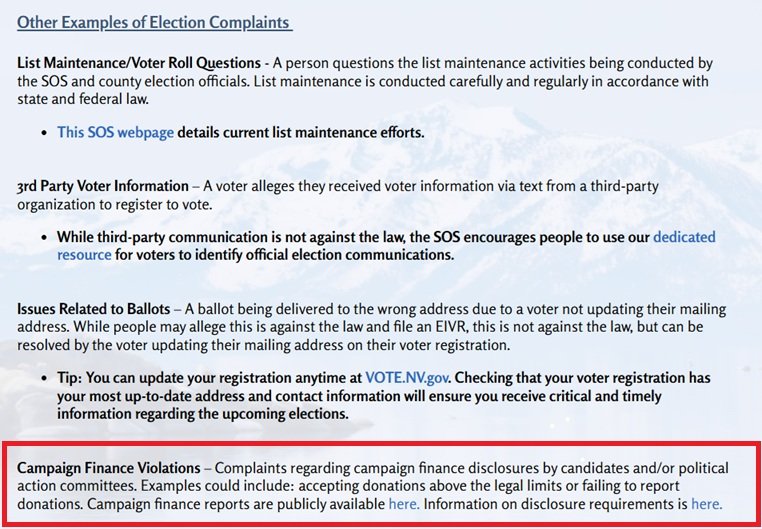
From the Nevada Secretary of State website today.
As we head toward the January 15, 2026 deadline—when campaign Contribution and Expense reports will finally reveal just how much money our elected officials have been collecting—one uncomfortable question keeps coming up:
Who’s checking any of this?
What we’ve learned is discouraging. Despite the importance of these reports, there is no routine audit of Contribution and Expense filings by the Nevada Secretary of State’s office. The system largely relies on candidates and elected officials to tell the truth—and assumes compliance unless someone flags a problem.
Come on, folks.
According to the Secretary of State’s own website, the office does have the authority to investigate and enforce campaign finance laws. It can issue subpoenas. It has a dedicated investigative team. It publishes quarterly reports on election law violations. Reports are filed electronically through the AURORA system, which can identify discrepancies and missed deadlines. There are fines for late or inaccurate filings. PACs can even be audited.
But here’s the catch: most investigations are triggered, not proactive.
That means someone has to file a complaint. Or a discrepancy has to be obvious enough to raise a red flag. Or a situation has to rise to the level of the Election Integrity Task Force.
In other words, unless there’s a reason to look—there often isn’t a look.
That should concern anyone who cares about transparency. Campaign finance reporting isn’t a suggestion; it’s the backbone of public trust. Yet the current system sends a clear message: if no one complains, and nothing screams “wrong,” your report is taken at face value.
With millions of dollars flowing through campaigns across Nevada, it’s a little disheartening to know there’s no regular auditing, no routine verification, and no real expectation that filings might be reviewed unless something goes sideways.
Accountability shouldn’t depend on luck, whistleblowers, or citizen sleuths with spare time.
As those January reports roll in, voters should remember this: disclosure is only meaningful if someone is actually checking the details. Otherwise, transparency is just a promise—written on paper and filed away.